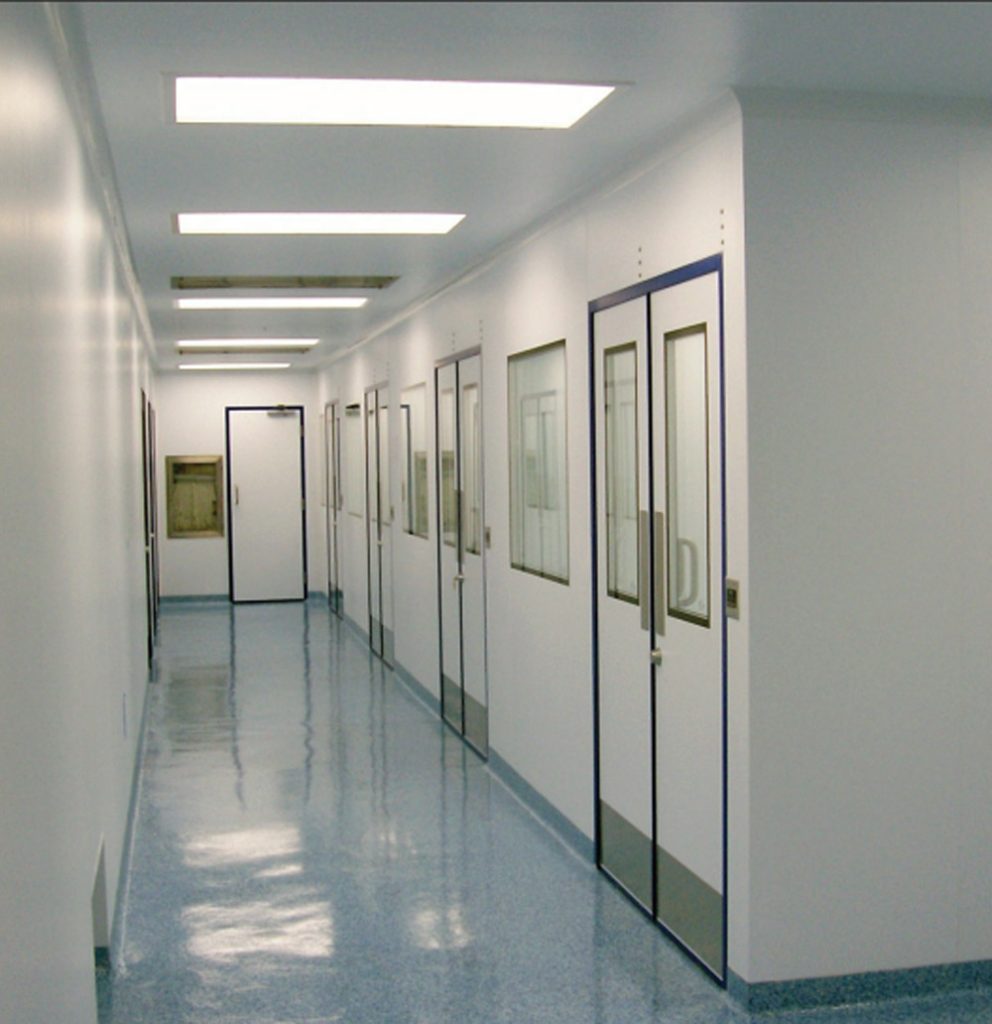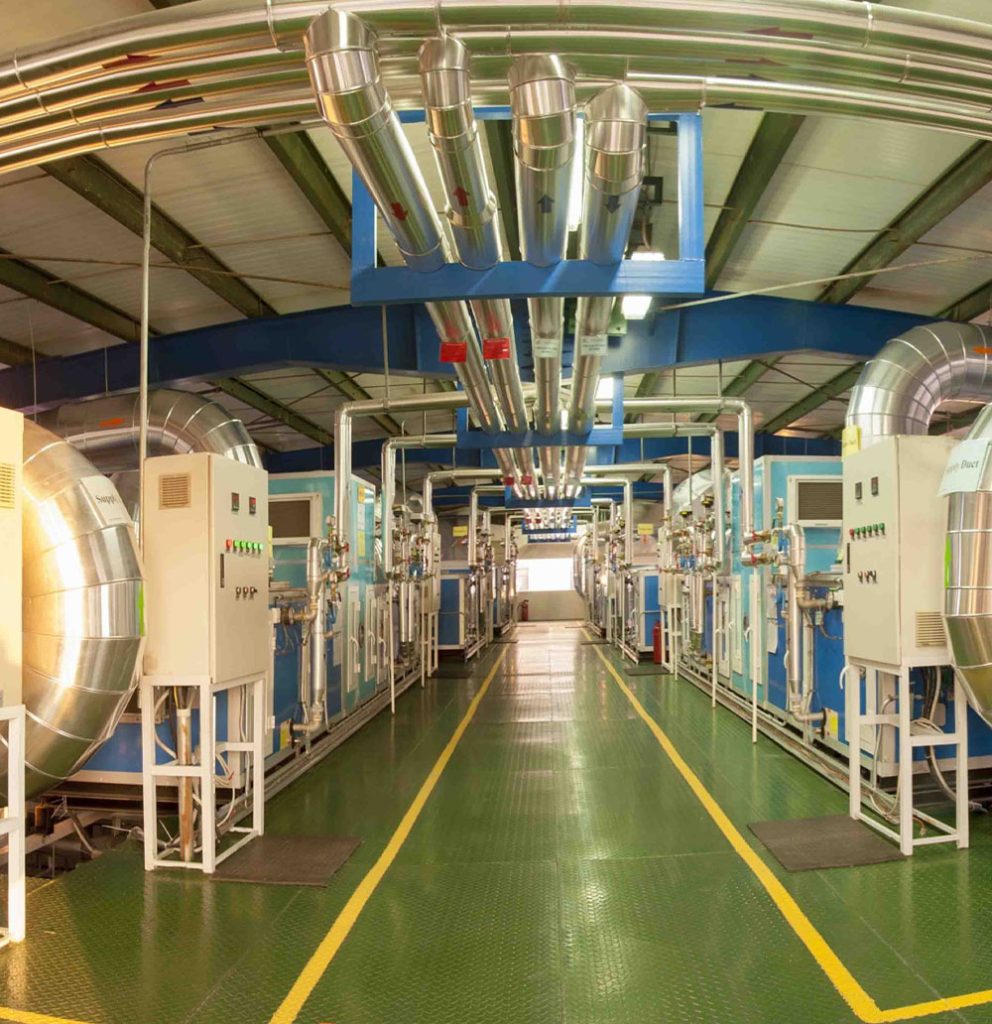


Disinfection equipment, such as wipes and tees, as well as alcohol spray fittings and parts, may be contaminated with spores and this contamination may be spread by these devices. It is quite clear that when wipes have absorbed hard particles and microbes, the effectiveness of alcohol may be reduced, so wipes and any equipment used for disinfection in critical areas should be sterilized before the alcohol disinfection process.
Time required for disinfectant to work
The key to the effectiveness of disinfectants is the contact time for them to be fully effective. Determining the contact time is usually a balance between the time the disinfectant needs to reduce the microbial load and the time it takes for the equipment to reach the desired level of cleanliness. For areas where speed of action is critical, an alcohol-based disinfectant should be effective within at least 1 minute and should evaporate before the operator can intervene at a critical point, but for areas where the disinfectant is used for less critical surfaces, the time can be increased to 4 hours. It is clear that keeping surfaces wet for this period is not appropriate and it is possible that the alcohol will be recontaminated during this time.
Therefore, the best solution is to fully validate the time required to disinfect different surfaces and it is recommended that the contact time be tested and evaluated. If some factories intend to change the conditions that may affect the contact time or intend to shorten the contact time, re-evaluation and validation should be carried out.
Evaluation of disinfectant effects
The effectiveness of cleanroom disinfectants is measured through environmental monitoring. Microbial monitoring is a program that determines the number of occurrences of living microorganisms and non-living particles such as dust and skin cells. Trend analysis of environmental monitoring data provides an indicator that action should be taken if the cleanroom disinfection program is moving out of control.
Viable Monitoring Surfaces provides a multi-faceted approach to assessing the effectiveness of surface disinfection and is designed to determine the level of bacteria and fungi present at defined locations during a specific step in the process and product filling. It is also designed to answer questions such as how many microorganisms are present, when, and why.
The microbial monitoring program is normally controlled by the microbiology unit, and the appropriate frequency and monitoring period are determined based on a risk assessment approach.
Preparation of 70% alcohol for use in clean rooms
Today, alcohol is accepted as a cleanroom contamination control agent against microorganisms. Alcohol solutions that have not been irradiated or filtered with sterile filters are highly susceptible to contamination with spores. Therefore, sterilization of alcohol before use is a very important factor and it is essential that it be free of spores before use on surfaces in critical areas in aseptic processing, which is often done using membrane filters, after which the alcohol can be stored without problems.
As stated in the GMP guidelines, sterilization is mandatory in cleanroom classes A and B, but is recommended in other cleanroom classes. Studies conducted long before 1990 have shown that the effectiveness of alcohol is at its maximum at a concentration of 70% diluted with water. The presence of water is very important for the effect of alcohol on proteins and the time to kill microorganisms, but not any type of water can be used for diluting pure alcohol, and only WFI is recommended for the dilution process because it reduces the possibility of endotoxin in the final product and the use of any other type of water than WFI increases the risk of endotoxin introduction. Alcohol sterilization is achieved specifically or by one of the following two methods:
Aseptic-Strilising Filtration.1
Terminal-Gamma Irradiation.2
The aseptic method is widely used in in-house activities, taking into account the necessary equipment and skills. The cost of this method is relatively high, but in this method, by using filtration, a significant part of the living and non-living contaminants is separated from the liquid. Operators must sterilize the filters before using them, and the integrity test of the filters must be performed according to a predetermined schedule, and the integrity of the filters must be verified and confirmed before use.
The following are important factors affecting the aseptic method:
1. Inspection and verification of storage tanks
Sterilizing supplies such as spray nozzles.
3. Permeability test of all filters
4. Filtering the raw material and the final product
5. Sterilizing the 0.2 micron filter
6. Use of WIFI and its production costs and 0.2 micron filter
7. Validate all components of the production process and complete documentation for each batch.
Terminal-Gamma Irradiation: Another method that assures cleanroom users that the sterile disinfectants purchased are capable of continuous sterilization. The degree of sterilization is directly related to the amount of radiation absorbed by the material, which must have sufficient energy to kill microorganisms and not be so high as to cause unwanted substances. The choice of one of these two methods depends on economic considerations and the volume and size of a factory’s production.
Validation and qualification of disinfectant effect
A number of national and international standard operating procedures have been published for disinfectant efficacy tests. The standards do not provide a general method that can be applied to all disinfectants, so there is no obstacle to relying on the certificates of the manufacturing companies and they can be referred to if qualification tests are performed.
Regulatory agencies expect pharmaceutical companies to have an assessment of the effectiveness of disinfectants. The qualification of a disinfectant is done by performing tests that demonstrate that the disinfectant is capable of reducing the observed microbial load. For this test, inoculated surfaces are used and after a specified contact time, the residual microorganisms are recovered. After comparing samples that have not been exposed to the disinfectant with samples that have been exposed, the competence of the disinfectant to reduce the microbial load is assessed. The qualification of the disinfectant’s effectiveness should provide documentation that clarifies that fungal and bacterial activity will be eliminated by using this disinfectant.
Validation of the effectiveness of disinfectants
In the use of disinfectants, validation testing is performed to verify the effectiveness of the disinfectants using surfaces inoculated with the same materials used in the production room and with a similar contamination. The contact plate indicates that the activity of the contaminants has been destroyed by the use of the disinfectants after a specified activation time. Validation testing is performed initially and when cleaning and disinfection methods have not been established and qualified. Repeated validation of disinfectants is not necessary in cases where the maintenance of clean rooms has been clearly qualified.
Disinfection using trained personnel
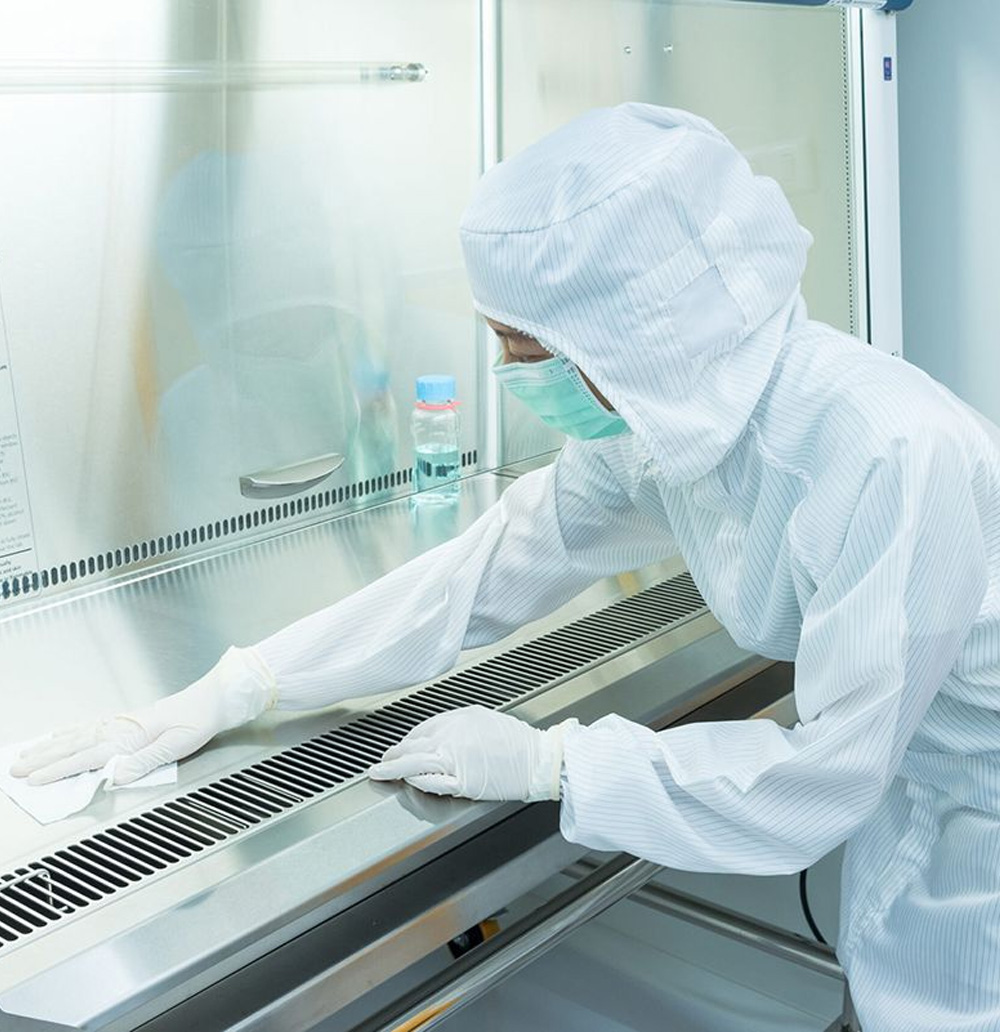
According to cleanroom approaches, disinfection operations are usually performed by cleanroom personnel in critical areas. These personnel are well trained and their behavior and handling of disinfectants are as important as the details of the disinfection operations as stated in the SOPs. Disinfection procedures should be well defined and documented, with written protocols including schedules, responsibilities, and methods for preparing disinfectants.
When there is documented assurance that microbial, fungal, and spore contamination on disinfected surfaces has been minimized, aseptic conditions can be said to have been established. Such conditions can be applied during the aseptic process where the risk of contamination of sensitive and critical surfaces cannot be completely eliminated. The above text is an overview of the necessity and method of disinfection in production spaces and equipment, which is a key part of cleanroom contamination control.