
10 pieces
Injectable
40mg
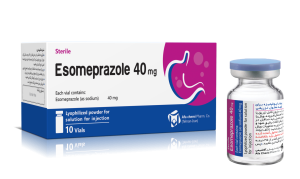
Esomeprazole Sodium
Powder for solution for intravenous injection and intravenous infusion
40 mg
This medicine has been prescribed for your current condition. Therefore, do not use it in similar cases or recommend its use to others.
General instructions:
Before taking this medicine, consult your doctor in the following cases:
If you are allergic to this medicine or any other medicines or any other substance such as food additives, preservatives, dyes, etc.
In case of severe liver or kidney problems.
If for any reason you need to do a special blood test (chromogranin A).
Use during pregnancy and breastfeeding:
If you are pregnant, you should consult your doctor or pharmacist about taking esomeprazole.
It is not known whether esomeprazole is excreted in breast milk, so this medicine is not recommended for use during breastfeeding.
Warnings:
Esomeprazole does not usually affect the ability to drive or use any tools or machines. However, side effects such as dizziness and blurred vision may occur uncommonly. If the patient is affected, he/she should not drive or operate machinery.
Avoid taking es-omeprazole if you are allergic to other proton pump inhibitor drugs (such as pantoprazole, lansoprazole, rabeprazole, omeprazole).
Avoid taking es-omeprazole if you are taking a drug containing nelfinavir (for the treatment of HIV infection).
If any of the following happens to you before or after taking es-omeprazole, you should consult a doctor immediately:
Severe weight loss or loss of appetite, stomach pain or indigestion, vomiting of food or blood, black stools
You should inform your doctor if you have osteoporosis or are taking corticosteroids.
Es-omeprazole can affect the way some drugs work, so it is best to inform your doctor if you are taking other drugs.
Dosage:
The dosage of the drug is determined by the attending physician for each patient. However, the usual dosage of the drug is as follows:
This drug belongs to a group of drugs called “proton pump inhibitors” that reduce the amount of stomach acid secreted.
Adults:
20 to 40 mg once a day as an intravenous injection:
The maximum dose prescribed in patients with severe liver disease is 20 mg per day.
Gastroesophageal reflux disease (GERD)
Gastric ulcers caused by taking nonsteroidal anti-inflammatory drugs (NSAIDs) and narcotics
Prevention of rebleeding following endoscopy to treat acute gastric or duodenal bleeding
The recommended dose for preventing rebleeding of gastric or duodenal ulcers is 80 mg as a slow intravenous infusion over 30 minutes, then 8 mg per hour for 3 days. In case of severe liver problems, 4 mg per hour for 3 days
may be sufficient.
Children and adolescents 1-18 years:
The dosage in children is the responsibility of the doctor. Esomeprazole in patients under 18 years:
Gastroesophageal reflux disease (GERD)
For children 1-11 years, the recommended dose is 10 or 20 mg once a day.
For children 12-18 years, the recommended dose is 20 or 40 mg once a day.
How to prepare and dilute the drug:
Infusion solution: First, to prepare, slowly add the contents of the vial to 5 ml of sterile water for injection or 0.9% sodium chloride injection solution or 5% dextrose or lactated Ringer’s solution, swirl the vial gently until foaming does not occur and the powder is completely dissolved. Then, the resulting solution should be diluted in at least 100 cc of 0.9% sodium chloride injection solution or 5% dextrose or lactated Ringer’s solution and infused slowly for 30 to 60 minutes.
Intravenous injection: First, to prepare the contents of the vial, slowly add 5 ml of sterile water for injection, swirl the vial gently until foaming occurs and the powder is completely dissolved. At least 3 minutes are required for injection.
Note: The prepared solution in each case should be free of particles, clear and without discoloration.
Side effects:
In addition to the desired therapeutic effects, every medicine may also have some unwanted side effects. If any of the following side effects occur, inform your doctor.
Important side effects that require immediate notification to the doctor if they occur:
Acute:
Yellowing of the skin, dark urine and fatigue, which can be signs of liver problems.
Sudden wheezing, swelling of the lips, tongue and throat or body, skin rash, fainting or difficulty swallowing (severe allergic reaction)
Sudden onset of severe rash or redness of the skin with blisters, which may occur several weeks after starting treatment.
Common:
Headache, diarrhea, stomach pain, constipation, bloating, feeling sick or vomiting, injection site reaction, benign polyps in the stomach
Uncommon:
Swelling of the feet and ankles, sleep disturbances, dizziness, tingling sensation, vision problems such as blurred vision
Dry mouth, skin rash, hives and itchy skin, fracture of the hip, wrist or spine
Rare:
Blood problems such as low white blood cell or platelet counts, low sodium levels in the blood.
Feeling confused, confused or depressed, taste changes, bronchospasm, inflammation inside the mouth and thrush, liver problems, including jaundice which can cause yellowing of the skin, dark urine, hair loss (alopecia), joint pain (arthralgia) or muscle pain (myalgia), increased sweating.
Storage conditions:
Store the dry product at a temperature below 25°C, away from light and moisture, and in the original medicine box until the medicine is used.
After use, to protect the environment, do not throw any medicine in the sewer or non-recyclable waste.
Keep the medicine out of the reach of children.
Sale without a doctor’s prescription is prohibited.
Dosage forms and packaging:
This medicine is available in tablet form containing 40 mg of omeprazole (as
Effects of Intravenous and Oral Esomeprazole
Esomeprazole is the S-isomer of omeprazole, a proton pump inhibitor. This drug is administered as a magnesium or sodium salt depending on the dosage of omeprazole. 22.2 mg of its magnesium salt and 21.3 mg of its sodium salt contain approximately 20 mg of omeprazole.
Uses of the product Esomeprazole is used to treat symptoms of reflux of gastric contents into the esophagus, treat benign gastric and duodenal ulcers, Zollinger-Ellison syndrome, prevent gastric ulcers associated with Helicobacter pylori or the use of nonsteroidal anti-inflammatory drugs, and also to reduce stomach acid in surgery.
Advantages of using Esomeprazole as an injectable powder of Esomeprazole Sodium
Short-term treatment of GERD: Esomeprazole injectable powder can be used to treat diseases such as gastroesophageal reflux disease (GERD) at a dose of 20 or 40 mg once a day for less than 10 days.
Faster therapeutic efficacy: Esomeprazole injectable formulations can provide more immediate efficacy compared to oral medications and are useful in certain situations where rapid action is needed.
Surgical procedures: Esomeprazole injectable powder may be used before and after certain gastrointestinal surgeries to reduce the risk of acid-related complications and speed up recovery.
Continuous administration: In some cases where patients are unable to take oral medications, Esomeprazole injectable powder allows for continuous administration of the medication, ensuring consistent therapeutic levels.
Hospital settings: Esomeprazole injectable powder is commonly used in hospital settings, especially for patients who are unable to take medications orally for various reasons.
Be careful if you are at risk for osteoporosis. Some risk factors include drinking alcohol, smoking, taking steroids, taking medication to treat seizures, or having a family member with osteoporosis. Talk to your doctor about the risks of osteoporosis.
Among the interactions of this drug with food is that long-term treatment of more than two years may lead to impaired absorption of vitamin B12 and its deficiency. Symptoms of this deficiency manifest as flushing.
The side effects of this medication in adults are slightly different from those in children. These include headache, diarrhea, nausea, flatulence, constipation, and dry mouth in adults. Other side effects of this medication in children, in addition to the above, include vomiting and increased breathing rate (tachypnea) in infants. When taking esomeprazole, pay attention to the following points. This medication may increase the risk of hip, spine, and wrist fractures in people with osteoporosis. This risk may be higher if you take this medication in high doses or for more than a year, or in people over 50 years of age.
If you require our services and are seeking consultation from the Afachemi team, you can get in touch with our experts by completing the consultation form.


