
30 pieces
Oral
7.5mg, 15mg, 30mg, 45mg
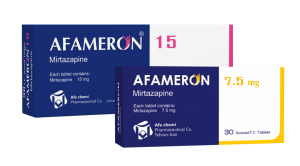
30 and 45 mg coated tablets and 15 mg scored coated tablets
This medicine has been prescribed for your current condition, so do not use it in similar cases or recommend its use to others
General instructions
Before taking this medicine, consult your doctor in the following cases
If you are allergic to this medicine or any other substance such as food preservatives, dyes, etc.
If you are taking monoamine oxidase inhibitor (MAOI) drugs or have taken these drugs within the past two weeks.
If you are taking antibiotics, antifungals, antivirals, any neuroleptics such as SSRIs, painkillers, digestive drugs and blood thinners.
In case of other diseases such as seizures, liver disease, kidney failure, heart disease, low blood pressure, urinary retention, glaucoma, diabetes, and psychotic diseases or depression.
Use during pregnancy and lactation:
Mirtazapine should not be used during pregnancy and lactation except under the advice of a specialist.
Warnings:
This drug is not approved for use in children and adolescents under 18 years of age.
In case of depression and increased suicidal tendencies in the first weeks of treatment, a psychiatrist should be consulted.
There is a contraindication between the simultaneous use of mirtazapine and monoamine oxidase inhibitor drugs such as moclobemide, tranylcypromine, selegiline; for this reason, there should be a gap of at least two weeks between the use of these drugs.
In case of any symptoms of infection and flu such as fever and sore throat, inform your doctor.
Long-term use of mirtazapine causes decreased salivation, candidiasis, and tooth decay.
Concurrent use with SSRIs can cause serotonin syndrome.
Avoid concomitant use of mirtazapine with linezolid.
The dose should be adjusted in liver and kidney problems.
Mirtazapine can increase blood cholesterol and triglyceride levels.
Be sure to inform your doctor if you have a history of seizures or alcohol use.
Mirtazapine can cause impaired concentration, so avoid activities that require high accuracy, such as driving, when starting to take the drug.
Dosage:
The doctor determines the amount of the drug for each patient, but the usual dose is as follows.
Depression:
In adults:
Start with 15 to 30 mg (at night before bedtime), then, depending on the patient’s condition, it may be increased to 45 mg per day within one to two weeks.
In the elderly:
Start with 7.5 mg (at night before bedtime) and then increase by 7.5 to 15 mg per day depending on the patient’s condition. Do not exceed 45 mg per day.
Children:
This drug is not recommended for use in children and adolescents under 18 years of age.
Note: In case of kidney and liver problems, the dose of mirtazapine is reduced.
How to take the drug:
The drug can be taken with food or on an empty stomach
If you take more than the prescribed amount, see a doctor. Symptoms of drowsiness and increased heart rate can be signs of drug poisoning.
If you miss a dose, take it as soon as you remember. If it is almost time for the next dose, skip that dose and do not double the dose.
Avoid stopping the drug suddenly.
Side effects:
In addition to the desired therapeutic effects, any drug may have some unwanted side effects. Inform your doctor if any of the following side effects occur.
Important side effects that require doctor’s notice if they occur:
Common or very common side effects: anxiety, increased appetite and weight, back pain, dizziness, drowsiness, dry mouth, fatigue, headache, nausea, diarrhea and vomiting, edema, orthostatic hypotension, sleep disorder, tremor
Uncommon side effects: hallucinations, mania, movement disorders, oral and dental disorders, syncope
Rare or very rare side effects: aggression, pancreatitis, agranulocytosis, arrhythmia, bone marrow disorders, speech disorder, urinary retention, severe skin reactions, serotonin syndrome, seizures, rhabdomyolysis, yellowing of the skin and eyes (sign of jaundice), hyponatremia, granulocytopenia, eosinophilia.
Storage conditions:
Store the medicine at a temperature below 30 degrees Celsius away from light and moisture.
Avoid using expired medicine.
Keep the medicine out of the reach of children.
Pharmaceutical forms and packaging:
This drug is produced and supplied in the form of coated tablets containing 7.5, 15, 30 and 45 mg of mirtazapine in boxes of 30 by Afa Chemie Pharmaceutical Company.
Mirtazapine was first introduced in the Netherlands in 1987 as an antidepressant and then registered in the United States in 1996. This drug is different in chemical structure from conventional drugs such as TCA and SSRI, has fewer side effects and is better tolerated by patients. The onset of the drug’s effect is also faster and reaches its maximum therapeutic effect within 2 to 4 weeks.
Mirtazapine is an approved drug for the treatment of depression. Due to the specific mechanism of action of the drug and the type of side effects, it is prescribed in many diseases. Some studies have shown the effectiveness of the drug in improving sleep, increasing appetite and weight, reducing nausea and vomiting, and stabilizing mood. On the other hand, due to its cardiovascular profile, lack of seizures, and rapid onset of effect, the drug seems to be safe. Many diseases in which mirtazapine was prescribed were mentioned above, indicating the effectiveness of mirtazapine. Some of the uses mentioned have not been approved by the FDA and are considered off-label uses of the drug, but it is expected that further studies will confirm the efficacy of mirtazapine in these diseases.
The drug is available in two forms: oral tablet and orally disintegrating tablet. In adults, it is taken at bedtime with 15 mg and increased as needed within one to two weeks. The effective dose of the drug is 15 to 45 mg daily. In the elderly, it is started at a dose of 5.7 due to a longer half-life and lower clearance. The safety and effectiveness of the drug in children and adolescents have not been established.
Mirtazapine produces its therapeutic effect by blocking adrenergic and serotonin receptors. The drug is well absorbed from the gastrointestinal tract and provides a bioavailability of 50%. This bioavailability is not affected by food. Mirtazapine is extensively metabolized in the liver and 75% is excreted by the kidneys and 15% by the intestines. Pharmacology of the drug depends on age, gender, and hepatic and renal insufficiency, and the half-life of the drug is 20 to 40 hours, which increases by 30 to 40% in hepatic insufficiency and decreases by 30 to 50% in renal insufficiency. In elderly men, the clearance of the drug decreases by 40% and in elderly women by only 10%. In women of all ages, the clearance of the drug and the half-life are longer than in men. Mirtazapine has a low risk of drug interactions.
Mirtazapine uses:
Below we will review the various uses of mirtazapine, some of which have been approved and some are in the clinical study phase.
Depression: This disease is one of the most common mental disorders in the world, and the effectiveness of mirtazapine in various types of depression has been proven.
Recurrent depression: Mirtazapine reduces the severity and frequency of depressive symptoms.
Depression in the elderly: In addition to depression, the elderly also have anxiety and sleep problems. In addition to treating depression, taking mirtazapine also reduces anxiety and improves sleep profiles, and reduces treatment costs in the elderly.
Depression during menopause: In menopausal women who were resistant to estrogen replacement therapy and were treated with mirtazapine, depressive symptoms decreased within a week.
Depression in dementia patients: In patients with Alzheimer’s disease, treatment with mirtazapine controls depressive symptoms, improves mood, reduces anxiety, and increases appetite, while not causing serious acute complications or cognitive impairment.
Post-myocardial infarction depression: Depression is very common after MI. Mirtazapine is effective in controlling this type of depression, and it has been able to significantly reduce inflammatory factors after stroke.
Post-stroke depression: In these people, mirtazapine is used as the first choice in preventing depression.
AIDS-related depression: The effectiveness of mirtazapine in controlling anxiety and depression in these patients has been proven.
Organ transplant anxiety and depression: Anxiety and depression should be treated after organ transplantation, since mirtazapine has few side effects and interactions and has low immunosuppressive effects, it is the choice in these people. In addition, this drug is effective due to the effects of drowsiness and weight gain in people who have undergone organ transplants and have decreased appetite and sleep disorders.
Anorexia Nervosa: Mirtazapine can be effective in addition to treating depression caused by this disease, due to increased appetite and weight.
Sleep disorders: Mirtazapine improves the sleep profile in patients with depression by reducing the time to fall asleep, reducing the time awake between sleep, and increasing the duration of sleep. In addition, mirtazapine is safer than other sleeping medications such as benzodiazepines.
Anxiety disorders: Mirtazapine is effective in many anxiety disorders such as panic anxiety, social anxiety, PTSD, and various phobias.
Obsessive-compulsive disorder: In this disease, SSRIs are considered the first line of treatment, but they are not effective in 50 percent of patients. By adding mirtazapine to the treatment regimen, the onset of the therapeutic effect is faster and fewer side effects have been observed.
Substance abuse: Insomnia and depression are common side effects of substance withdrawal, which are reduced by taking mirtazapine.
Alcohol-induced depression: Amitriptyline is the first-line treatment for depression in people addicted to alcohol. Studies have shown that mirtazapine performs better than amitriptyline.
Alcohol withdrawal syndrome: Mirtazapine can reduce alcohol withdrawal symptoms by reducing anxiety.
Benzodiazepine withdrawal syndrome: Mirtazapine can reduce insomnia symptoms caused by benzodiazepine withdrawal.
Stimulant withdrawal syndrome such as amphetamine, cocaine, and marijuana: Mirtazapine has been proven effective in controlling symptoms caused by stopping the use of stimulants.
Mirtazapine has been studied in one or more clinical studies for the following medical conditions:
Treatment of nausea in cancer patients: Nausea and vomiting are very common in all types of cancer, and these side effects can impair quality of life during chemotherapy. Mirtazapine, with its serotonin antagonistic effects, can have antiemetic effects in these patients.
Treatment of excessive weight loss: Sleep disturbances, loss of appetite, and weight loss are improved by its histamine receptor blocking and serotonin antagonistic effects, leading to weight gain and improved sleep.
Irritable bowel syndrome: A common digestive disease that has a neurological and psychological origin. Mirtazapine reduces the symptoms of the disease and regulates digestive secretions with its serotonin antagonistic effects.
Gastroparesis or gastric paralysis: In this disease, gastric emptying is delayed and causes symptoms such as nausea, vomiting and abdominal pain. The treatment of this disease is gastrointestinal stimulants, antiemetics, endoscopy and surgery. In people who have not responded to conventional drug treatment such as metoclopramide, mirtazapine is a safe option that has been able to reduce nausea and vomiting well.
Vomiting during pregnancy: Vomiting during pregnancy causes weight loss and dehydration in women. Some studies have shown that mirtazapine has been very effective with its rapid onset of action in cases resistant to conventional treatments.
Neuromotor disorders: Mirtazapine has performed well in movement disorders, types of tremor, Parkinson’s disease and … .
Nervous headache: Mirtazapine has been able to reduce the severity, frequency, and duration of headaches in people who are resistant to amitriptyline.
Hot flashes: In breast cancer patients who are being treated with tamoxifen, mirtazapine has been able to reduce the symptoms of hot flashes.
Uses in children and adolescents:
Mirtazapine has been prescribed for insomnia, social anxiety, and anorexia nervosa, which has had satisfactory results but requires further studies.
Side effects of mirtazapine:
Drowsiness and increased appetite are common side effects of the drug, which are due to the antihistamine effects of the drug. The patient should be monitored for fever, sore throat, and lip and mouth infections while taking the drug, and if these symptoms occur, the drug should be discontinued. Serotonin syndrome or NMS syndrome may occur if the drug is taken simultaneously with dopamine and serotonin antagonists. These syndromes are life-threatening and cause hyperthermia, muscle stiffness, and brain problems. There should be a 2-4 week gap between taking mirtazapine and MAO inhibitors. It can increase the risk of suicide attempts in children and adolescents, so it should be used with caution in people with a history of suicide attempts, and the drug should be discontinued if suicidal symptoms are observed.
If you require our services and are seeking consultation from the Afachemi team, you can get in touch with our experts by completing the consultation form.


