
1 bottle
Oral
2.5mg
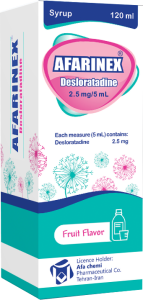
5 mg coated tablets and 2.5 mg syrup in 5 ml
This medicine has been prescribed for your current condition, so do not use it in similar cases or recommend its use to others.
General instructions:
Before taking this medicine, consult your doctor in the following cases:
If you are allergic to this medicine or loratadine or any other substance such as food, preservatives, dyes, etc.
If you have a history of any disease.
If you are pregnant or breastfeeding.
If you are taking any medication.
Use during pregnancy and breastfeeding:
Desloratadine should not be used during pregnancy and breastfeeding unless advised by a specialist.
Warnings:
Desloratadine interacts with many drugs, so inform your doctor if you are taking any medications, supplements, or herbal remedies.
Desloratadine may interact with ketoconazole, erythromycin, azithromycin, other antihistamines, fluoxetine, and cimetidine.
Desloratadine should be used with caution in people with a history of liver or kidney disease and seizures.
In people with glaucoma, the use of desloratadine can worsen the condition.
Due to the secretion of the drug in milk and the possibility of complications in infants, the use of the drug during this period is not recommended.
Dosage:
The dosage of the drug is determined by the attending physician for each patient. However, the usual dosage of the drug is as follows.
For allergies, runny nose, and itching:
Adults (over 12 years): 5 mg once a day.
Children:
6 to 12 months: 1 mg once a day
1 to 5 years: 1.25 mg once a day,
6 to 12 years: 2.5 mg once a day.
Note: The safety and effectiveness of this medication have not been established in infants under 6 months of age.
How to take the medication:
The medication can be taken with food or on an empty stomach.
Swallow the medication whole and avoid chewing or crushing the medication.
If you take more than the prescribed amount, consult your doctor.
If you miss a dose, take it as soon as you remember. If it is almost time for your next dose, skip the missed dose and do not double the dose.
Avoid stopping the medication suddenly.
This medication does not cause drowsiness at therapeutic doses, but if you take higher doses, avoid driving or doing tasks that require great care.
Side effects:
In addition to its beneficial effects, any medication may have some unwanted side effects. Tell your doctor if any of the following side effects occur.
Important side effects that require doctor’s notice if they occur:
Severe allergic reactions such as swelling of the face, tongue, lips, difficulty breathing, itching, and skin rashes.
Less common side effects:
Fatigue, dry mouth, headache, increased sensitivity to sunlight, increased heart rate, weight gain, increased appetite.
Rare side effects:
Seizures, hallucinations, muscle pain, confusion, diarrhea, nausea and vomiting, arrhythmia, digestive problems, insomnia, and seizures.
Storage conditions:
Store the medicine at a temperature below 30 degrees Celsius, away from light and moisture.
Avoid using expired medicine.
Keep the medicine out of the reach of children.
Dosage Forms and Packaging:
This drug is produced and supplied by Afa Chemie Pharmaceutical Company in the form of coated tablets containing 5 mg of desloratadine in boxes of 30 and syrup containing 2.5 mg in 5 ml of desloratadine in 120 ml bottles.
Afarinex is a second-generation oral non-hypnotic antihistamine that was first introduced in 2001 for the treatment of allergic rhinitis. This drug is a tricyclic histamine antagonist that selectively blocks peripheral H1 histamine receptors and also has anti-inflammatory effects. Later, this drug was also used in the treatment of urticaria in addition to allergic rhinitis. Desloratadine is well tolerated by patients due to its low side effects and drug interactions.
Second-generation antihistamines
Second-generation antihistamines include loratadine, cetirizine, bilastine, ebastine, and ropatadine, and new drugs in this class include desloratadine (a metabolite of loratadine), fexofenadine (a metabolite of terfenadine), and levocetirizine (an enantiomer of cetirizine). The advantages of the second generation include high efficacy, fewer side effects, and greater safety. Also, due to its less lipophobic nature, it has less penetration into the CNS, which reduces CNS side effects such as drowsiness; it also has fewer adrenergic, muscarinic, and dopaminergic interactions. Due to the longer half-life of this generation, the drug is taken once or twice a day, which increases patient acceptance. Specific H1 antagonists are more effective in reducing allergic rhinitis and urticaria; on the other hand, due to the wide therapeutic range, in some cases the dose of the drug can be increased without worrying about toxicity, while increasing the dose of first-generation drugs has caused side effects such as unconsciousness, coma, and respiratory problems. Due to their ease of use and reasonable price, second-generation antihistamines are the drugs of choice in the treatment of allergic rhinitis and urticaria and are used as the first line of treatment in children and adults.
Desloratadine has a greater affinity for the H1 receptor than the H2 receptor. In fact, desloratadine has the highest affinity for the H1 receptor among other antihistamines; for example, desloratadine has a 15-20-fold higher affinity for this receptor than loratadine and terfenadine, and a 200-fold higher affinity for this receptor than fexofenadine. On the other hand, it has a low affinity for peripheral muscarinic receptors, which is why antimuscarinic side effects such as dry mouth, dry eyes, urinary retention, and blurred vision are less common when used with therapeutic doses of desloratadine. This drug also has fewer CNS side effects such as drowsiness at therapeutic doses (5 mg daily).
Desloratadine is well absorbed after oral administration, with the onset of action of the syrup and tablet formulations being the same, occurring one hour after administration. The metabolism of desloratadine is not affected by grapefruit juice, although grapefruit juice reduces the rate and extent of absorption of fexofenadine. The half-life of the drug is 27 hours, so the dosage of desloratadine is once a day. Desloratadine is metabolized to 3-hydroxydesloratadine.
Afarinex has the fewest drug interactions among other antihistamines due to its minimal effects on the cytochrome system.
Drug Side Effects
Second-generation antihistamines such as desloratadine have fewer CNS and cardiovascular side effects due to their selective action on the H1 receptor and lower affinity for muscarinic receptors.
If you require our services and are seeking consultation from the Afachemi team, you can get in touch with our experts by completing the consultation form.


