

Fatty liver is the accumulation of triglycerides and other fats in liver cells, and the amount of these fatty acids in the liver depends on the balance between the rate of transport of these fatty acids to the liver and the rate of their elimination.
Sometimes fatty liver is accompanied by inflammation and death of liver cells (steatohepatitis). The most common cause of fatty liver is alcoholic fatty liver, which, according to studies, occurs more often in people who consume more than 60 grams of alcohol per day.
Non-alcoholic fatty liver is a silent disease that, as mentioned above,
occurs due to an imbalance between the rate of fatty acid and other fats being transported to the liver and the rate of their removal and consumption from the liver. It is often asymptomatic until the final stages, and in advanced stages, it manifests with symptoms such as persistent fatigue throughout the day, feeling sick and unwell, and a feeling of discomfort in the upper abdomen. In the final stages, when liver failure is established (cirrhosis), ascites (abdominal fluid accumulation), jaundice, edema, and swelling of the organs occur. Of course, it is worth noting that in the initial stages of liver damage, following the death of liver cells, the AST and ALT enzymes increase, which can be detected in blood tests. However, occasionally, despite the presence of fatty liver, these enzymes do not increase, and in most cases in non-alcoholic fatty liver, the levels of enzymes in It increases to a level less than 2 times. In patients suspected of fatty liver, virological tests should also be performed to rule out other liver diseases that can lead to increased liver enzymes. Liver
function tests, such as bilirubin levels and coagulation status, should also be performed to assess the extent of liver damage and liver function impairment.
Often, the clinical picture of fatty liver is obesity and increased triglycerides, which, along with increased liver enzymes, can lead the doctor to diagnose fatty liver.
Non-invasive diagnostic methods for proving fatty liver include SONO , CT and MRI , which are usually used with ultrasound , but unfortunately, ultrasound reports this disorder when more than 30 % of the liver tissue is involved, and patients who have fatty liver reported on ultrasound have a higher risk of developing cardiovascular diseases. Predictive factors for the degree of liver cell fibrosis in fatty liver diseases can include: age, high triglycerides, high body mass index ( BMI) , blood platelet levels, albumin levels and the ratio of AST and ALT based on the latest studies on the incidence of metabolic syndrome and type 2 diabetes, high fasting insulin levels, fasting AST levels are independent factors predicting the degree of liver cell fibrosis.
Treatment and control of fatty liver:
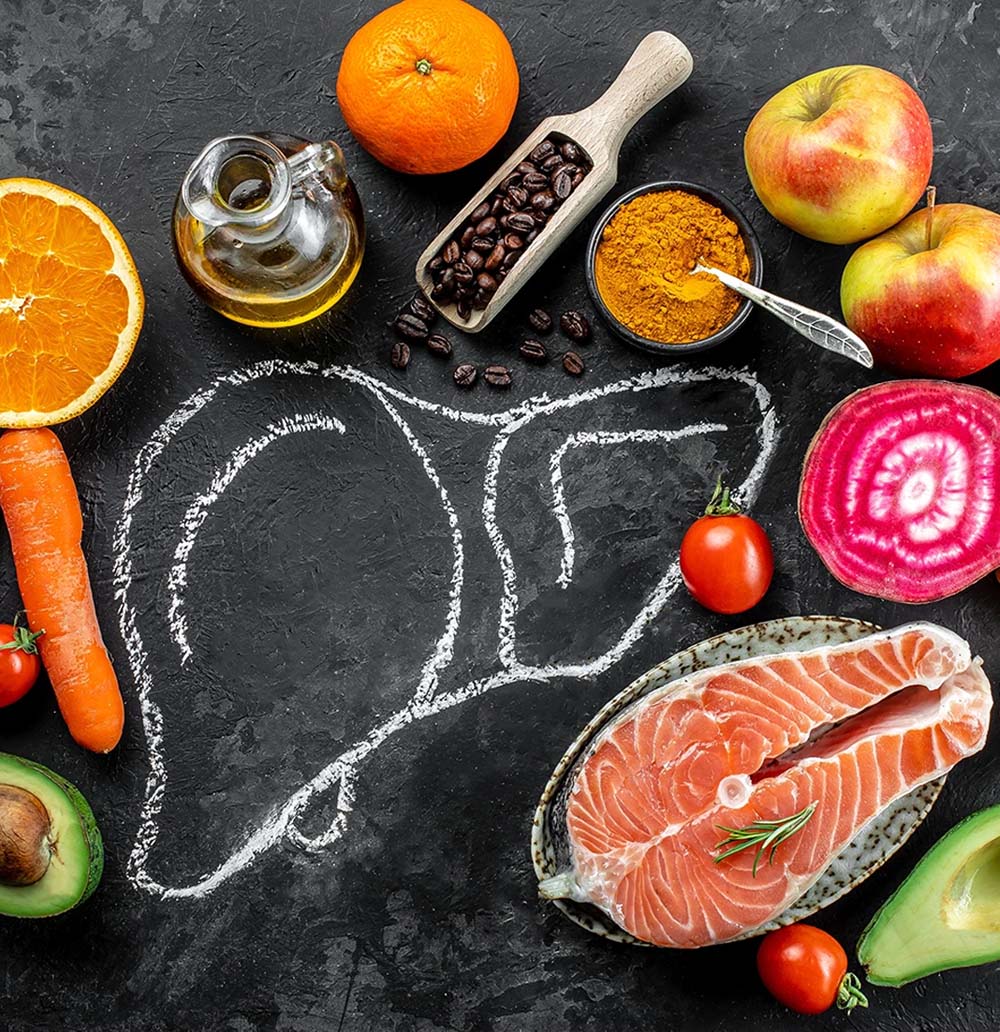
The best way to treat and control fatty liver in people with non-alcoholic fatty liver disease includes losing 10 % of body weight, controlling blood lipid levels with statins, exercising, avoiding excessive consumption of fats and carbohydrates, and not drinking alcohol or drinking very little alcohol. Some studies have also suggested the use of vitamin C , which has not yet been clinically proven. Vitamin E is recommended at a dose of 800 international units per day, of course, in people who do not have diabetes, and omega-3 fatty acids are recommended in people with high lipids.