

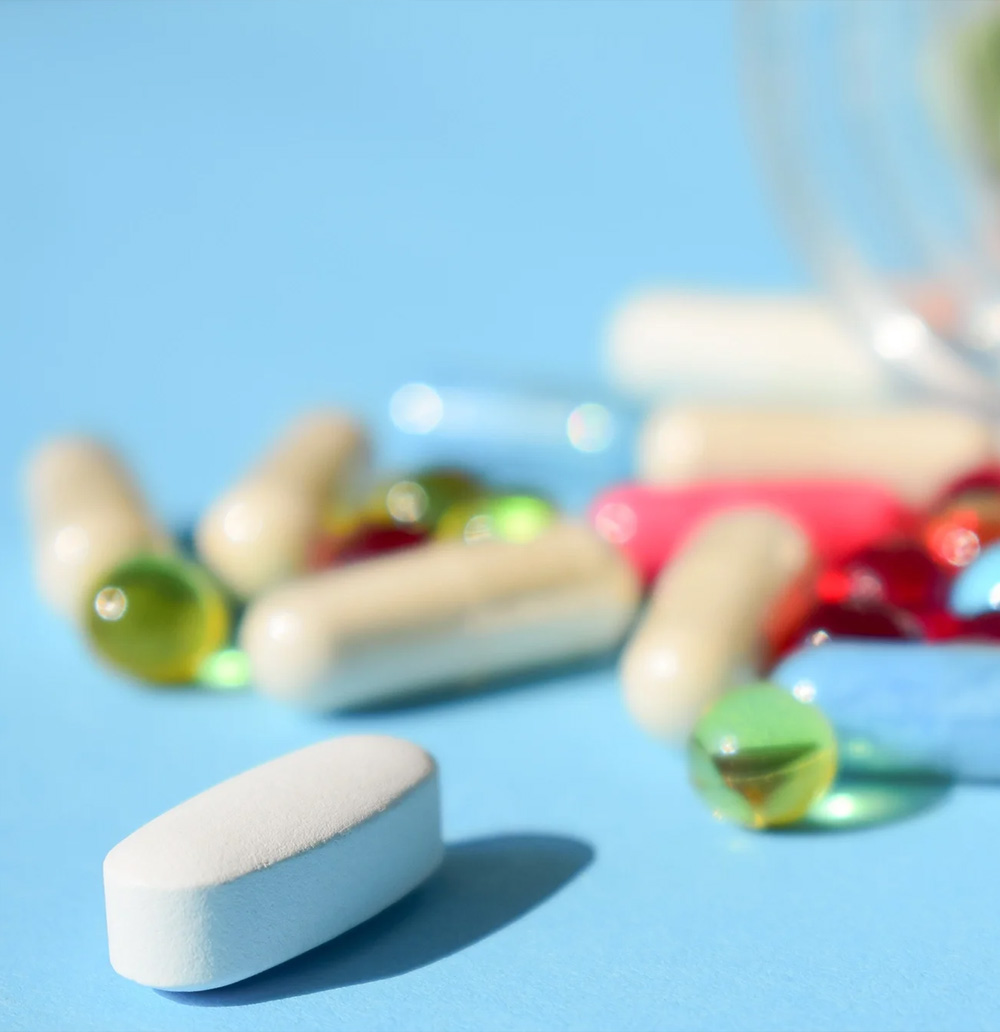
A large number of dosage forms are coated. This coating is applied to the outer surface or to the contents inside gelatin capsules.
The following objectives are achieved by the coating:
Protecting tablets and capsule contents from stomach acid
Protecting the stomach from drugs that damage the stomach wall, such as coated aspirin
Creating a slow-release drug
Masking the smell and taste of medicine
Helps maintain tablet shape
Ideally, the tablet material should be released gradually, making the drug available to the digestive tract. The tablet coating can be specially formulated to dissolve the drug at a specific rate, allowing it to be absorbed after digestion.
Tablet coating process and its control
The tablet coating process is carried out in a pressure-controlled, mesh drum. Angled blades are installed inside it to mix the tablets. The tablets are lifted by the blades and directed towards the center. The surface of the tablets is covered with the coating solution.
The solution sprayed on the tablet surfaces is dried by the hot air entering the machine. The air flow is regulated in terms of volume and temperature so that the drying is done in a controlled manner and at the same time the pressure inside the machine is negative compared to the room to create a separate and isolated condition for the preparation operation of the tablet coating machine.
A tablet coating machine usually consists of a spray nozzle, a coating chamber, a non-homogeneous coating solution tank, a peristaltic pump, a fan, filters, and connecting pipes. The tablet coating process usually includes the following phases:
1- Select the instructions for the desired batch
2- Weighing materials-loading
3- Warm up
4- Spraying
5- Cooling
6- Emptying the product
Some of the problems encountered in the tablet coating process and ways to solve them:
A large number of problems can arise during tablet coating operations, some of which we will describe and possible methods for solving.
Tablet-To-Tablet Color Variation
Problem: Using too little veneer material
Solution: Increase the amount of coating
Problem: Insufficient mixing of tablets during tablet coating
Solution: Increase Pan speed or upgrade the baffle system .
Problem: Low opaqueness of the tablet coating material
Solution: Reformulation of the tablet coating to increase the opaqueness using an opaquer and using a pre – coating system for colored tablets .
Problem: The solid portion of the coating solution is too high.
Solution: Reduce its amount in the coating solution
Problem: Insufficient number of nozzles on the device
Solution: Increase the number of nozzles
Problem: Improper spray distribution pattern on tablets
Solution: Ensure the correct location of the nozzles
Pan speed is low/Increase Pan speed
Tablets sticking together ( twinning )
Problem: The intensity and amount of spray is too high.
Solution: Reduce the speed of the spray or increase the powderiness of the spray.
Problem: Pan speed is too slow
Solution: Increase Pan Speed
Problem: Improper tablet shape
Solution: Choosing the right shape for the pills that reduces the chance of twinning (reducing the amount of contact surface)
Problem: Coating suspension solution is sticky
Solution: Change the formulation of the coating suspension
Problem: Nozzles are too close to the tablet bed
Solution: Increase the distance between the nozzles and the tablet.
CRACKINGCracking
The tablet core has a different coefficient of thermal expansion after coating. Avoid mineral fillers-calcium carbonate-sulfate as much as possible.
Problem: Low amount of forming material
Solution: Change the tablet coating formulation
peeling
Problem: Low adhesion and strength of the coating solution
Solution: Change the formulation of the tablet surface coating, it has low adhesion (select a formulation to increase adhesion)
Problem: Too much lubricant in the formulation
Solution: Use a supplement with lubricating properties (such as Starch 1500 ).
ORANGE PEEL ROUGHWESS
Problem: The viscosity of the coating solution is too high.
Solution: Reduce solids, reduce coating viscosity
Problem: The tablet coating liquid does not powder well.
Solution: Increase the pressure of powdering the tablet coating solution in tablet sprays
Solution: Select a formulation with appropriate adhesive properties
Problem: Inappropriate product logo design
Solution: Change the logo design
Problem: Insufficient amount of plasticiser in the coating
Solution: Reduce coating spray speed – increase drying rate
IndentationPicking/Sticking
Problem: The spray rate of the coating solution is too high.
Solution: Reduce the amount and speed of coating solution spray.
Problem: Pan speed is too slow
Solution: Increase Pan Speed
Problem: Insufficient powder pressure of the coating solution
Solution: Increase the pressure to powder the tablet coating solution
Problem: Improper distribution of coating solution
Solution: Choose the right formulation to increase adhesion.
LOGO INFILLING
Problem: Inappropriate logo design
Solution: Choosing the right design
Problem: LOGO is filled with coating material
Solution 2: By increasing the spray rate of the nozzles and reducing the inlet air temperature and reducing the distance between the nozzles on the tablet surface