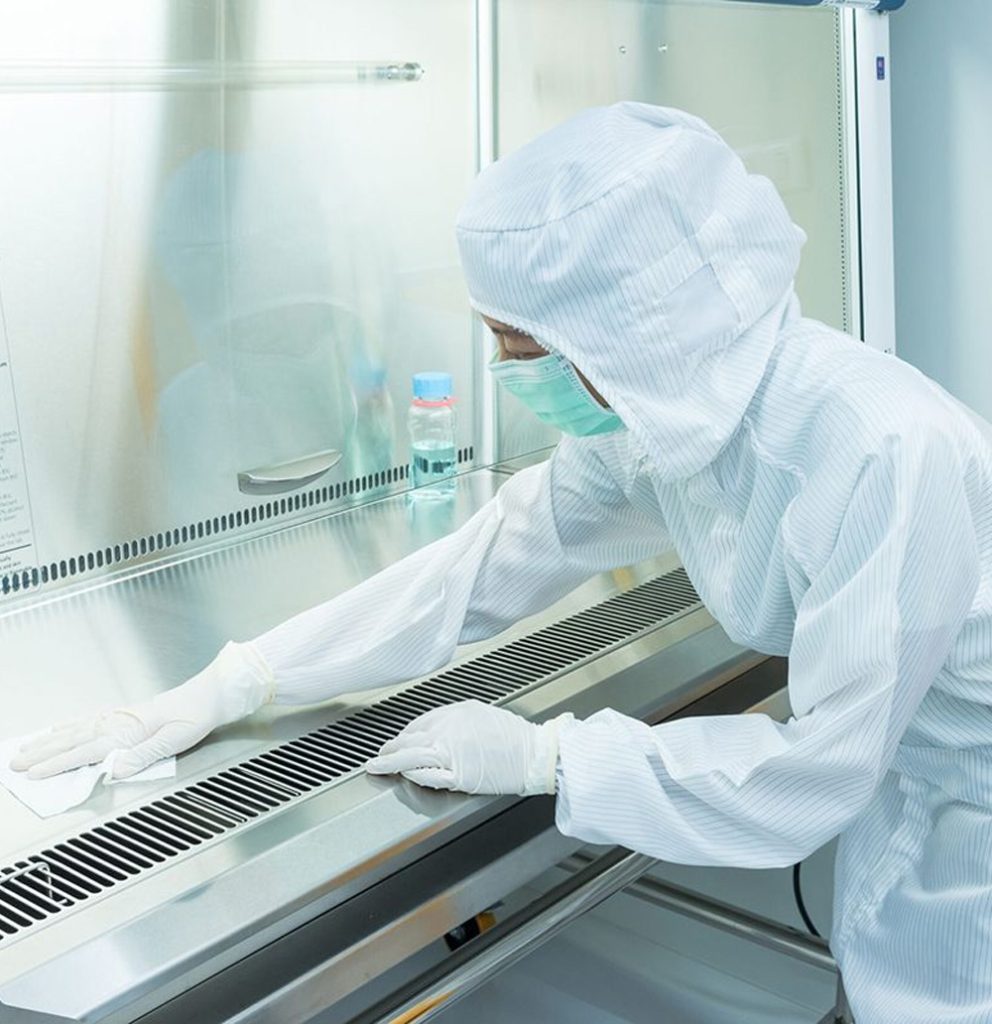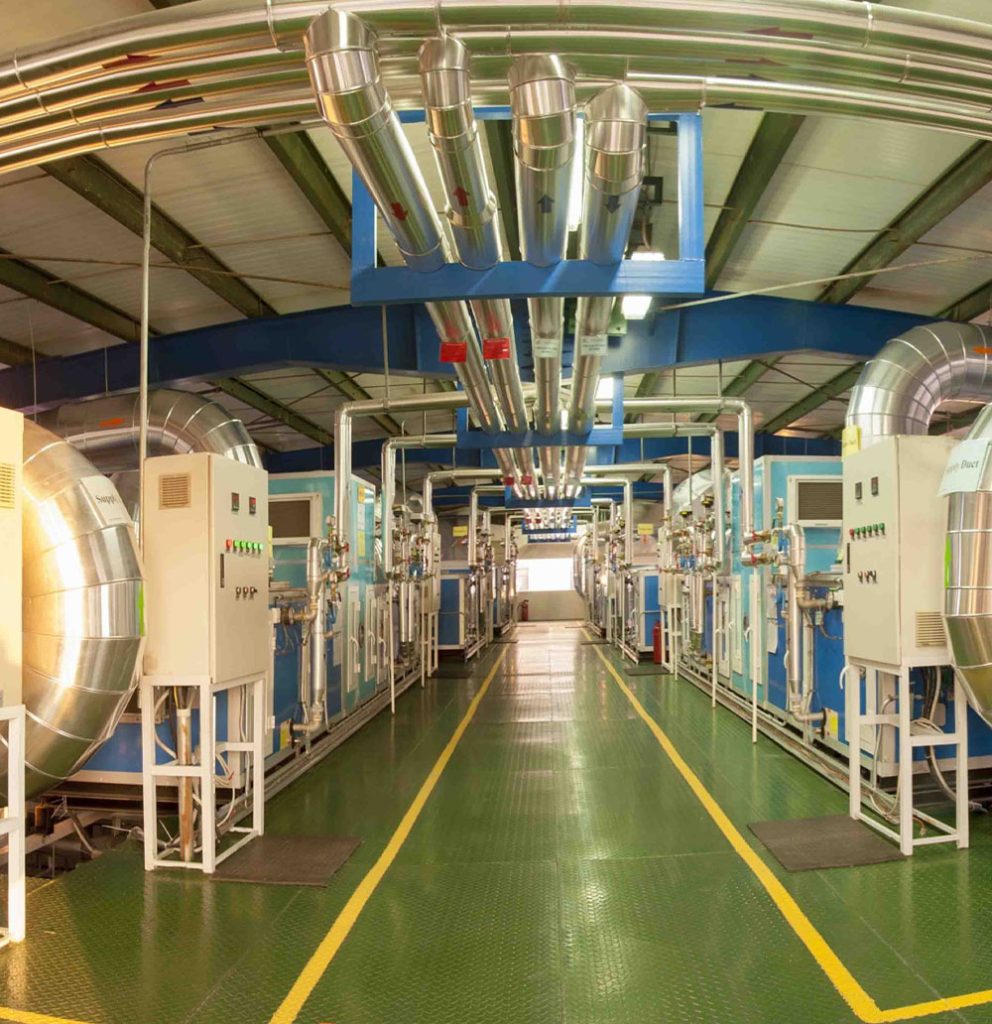


A clean room is an environment that is very low in dust, microorganisms, airborne particles, and chemical vapors. In other words, a clean room is an environment with controlled airborne particle contamination, with a certain number of particles per cubic meter or cubic foot. Also, depending on the type of activity that takes place in these rooms, other environmental conditions such as temperature, relative humidity, sound intensity, and light intensity must also be controlled.
Clean rooms are used in the pharmaceutical, biotechnology, medical, and microprocessor industries and other products that are sensitive to contamination. The air entering the clean room from outside passes through special air conditioning systems with high-efficiency filters to remove particles. The air inside the room is also regularly replaced and is placed in an air circulation cycle and passes through filters so that the contaminants produced inside the room are also removed from the room environment. Clean rooms are not sterile, but they are free of microbes and uncontrolled particles.
The materials and equipment that make up the clean room should be selected from a type that has the lowest amount of particle production and also has the least possible waste so that they can be easily cleaned.
Personnel working in clean rooms must wear appropriate protective clothing, depending on the sensitivity of the activity in the room. In some cases, personnel may also need to take an air shower before entering the room to minimize contamination on clothing or the body. Clean room design is a combination of architecture, mechanics, electricity, and control, based on a variety of factors that result from the user’s needs and the requirements of the activity within the clean room complex.
Cleanroom design and achieving the desired classification
Achieving the classification of pharmaceutical cleanrooms and spaces depends on the limits and conditions that are considered in the cGMP standard for product protection, which must be considered in the design of the spaces and ultimately the cleanroom will be validated or validated with this scope.
In the design of the cleanroom, the following items must be considered:
Air quality and filtration
Air exchange rate
Room pressure
Location of air terminals and air flow directions
Temperature
Humidity
Personnel flow
Material flow
Device movement
Process in which it is performed
Air conditions outside it
Space occupancy capacity
Room thermal load
Cleanrooms and spaces must be qualified or validated in three stages. These stages include: the as-built stage in the non-operational state (at-rest) and the establishment of the device in non-operational conditions and operational conditions (in operation).
Clean rooms are classified into different classes based on the number and volume of suspended particles per unit of air.
Types of Clean Rooms
Clean rooms are divided into two main types based on their ventilation method, which are: clean rooms with turbulent ventilation, multiple or turbulent ventilation, and unidirectional flow. Clean rooms with turbulent ventilation are also known as non-unidirectional, and clean rooms with unidirectional flow are mainly known as clean rooms or laminar flow.
Laminar Flow Cleanroom
In unidirectional cleanrooms, much more air is used than in turbulent cleanrooms, resulting in greater cleanliness.
A room with turbulent or turbulent ventilation in which filtered air is introduced through a vent other than the ceiling. This air is mixed with the room air and carries airborne contaminants to air outlets at the bottom of the walls. Here, the air exchange rate is normally equal to or greater than 20 times per hour, which is higher than the air exchange rate in typical rooms such as offices. In this type of cleanroom, contamination created by personnel and machinery is mixed and diluted by the ventilated air and then exhausted.
Unidirectional flow workroom:
High-efficiency filters are installed throughout the ceiling (and in some systems, in the walls) and air is drawn in through them. This air sweeps across the room in a unidirectional manner at a speed of 0.4 m/s and exits through the floor, removing contaminants from the room. This system uses more air than turbulent ventilation, but due to the direct movement of air, it minimizes the contamination spread around the room and sweeps out through the floor.