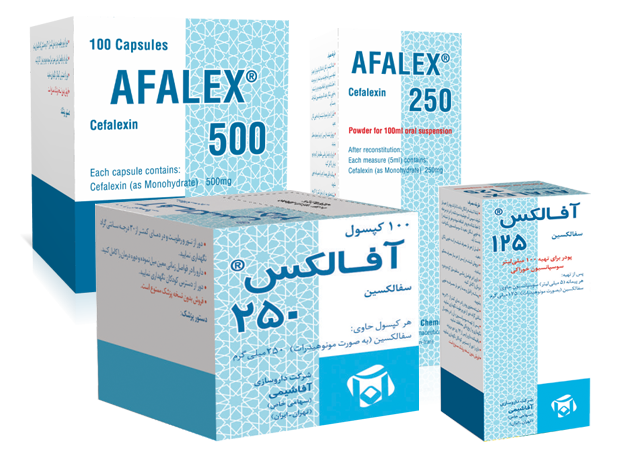
Afixim ® (Cefixim)
General patient instructions:
This medicine has been prescribed to treat your current condition, so do not use it in similar cases or recommend it to others
Before using this medicine, consult your doctor in the following cases:
If you are allergic to penicillins, cephalosporins or other medicines, foods, preservatives and dyes.
If you are taking alcohol and alcohol-containing products, aminoglycoside antibiotics, anticoagulants, dipyridamole
Heparin, pentoxifylline, valproic acid and probenecid.
If you have liver, kidney, digestive diseases, blood problems and phenylketonuria
Use during pregnancy and lactation:
Use of the medicine during pregnancy and lactation should be under the advice of a specialist doctor.
Warning:
Take the medicine at regular intervals and complete the course of treatment.
If the disease does not improve after a few days of taking the medicine, inform your doctor.
The medicine can be taken on an empty stomach or with a meal, but if gastrointestinal irritation occurs, take it with food.
In case of severe diarrhea, contact your doctor and avoid taking antidiarrheal drugs in this situation without consulting your doctor.
This medicine may cause disturbances in urine sugar measurement tests. Therefore, consult your doctor before changing your diet or changing the dosage of blood sugar-lowering drugs.
Correct dosage and method of taking the medicine:
The doctor determines the dosage of each medicine, but the usual dosage of this medicine is as follows:
Adults:
For bacterial infections, 200 mg every 12 hours or 400 mg once a day.
For the treatment of gonorrhea, a single dose of 400 mg
Children 6 months to 12 years of age weighing less than 50 kg: 4 mg per kilogram of body weight every 12 hours or 8 mg of body weight once a day.
Children under 6 months: The dosage is determined by the doctor.
Take the medicine at regular intervals and complete the course of treatment.
How to prepare the suspension:
First, shake the bottle to disperse the powder particles. Then add cooled boiled water to the powder in two stages up to the mark line and shake the bottle well each time to obtain a uniform suspension.
Shake the bottle well before each use.
Wash the measuring cup well before and after each use.
Close the bottle tightly after each use.
Missed dose:
If you miss a dose, take it as soon as you remember.
However, if it is almost time for your next dose, take the medicine as usual and do not double the dose.
Side effects:
All medicines can cause side effects, although not everyone will get them. Talk to your doctor or pharmacist if you experience any of the following side effects.
Side effects that need immediate medical attention:
Dark stools, chest pain, fever and chills, trouble urinating, shortness of breath, sore throat, white spots or sores on the lips or in the mouth, unusual bleeding or bruising, unusual weakness or tiredness, abdominal cramps and discomfort with severe pain, severe watery diarrhea (maybe with blood), hives, redness and itching of the skin, peeling skin, seizures, loss of appetite, nausea and vomiting, yellowing of the skin or eyes.
Side effects that disappear over time and as the body adapts to the drug, but require medical attention if they persist or worsen:
Moderate diarrhea, headache, mouth and tongue ulcers, mild abdominal cramps, itching, and vaginal discharge
Poisoning:
If you accidentally take more than the recommended amount, immediately consult a doctor or medical center.
Storage conditions:
Keep the medicine out of the reach of children.
Store dry powder for suspension, tablets, and capsules at a temperature below 30 degrees Celsius, away from direct light and moisture.
The prepared suspension can be stored in the refrigerator for up to 14 days. After this period, discard the remainder.
Protect the prepared suspension from freezing.
Avoid using expired medications.
Dosage form:
Capsule: containing 200 and 400 mg of cefixime (as trihydrate)
Coated tablet: containing 200 and 400 mg of cefixime (as trihydrate)
Powder for oral suspension: containing 100 mg of cefixime (as trihydrate) in 5 ml in 50 and 100 ml packaging