
10 pieces
Injectable
500mg, 1g
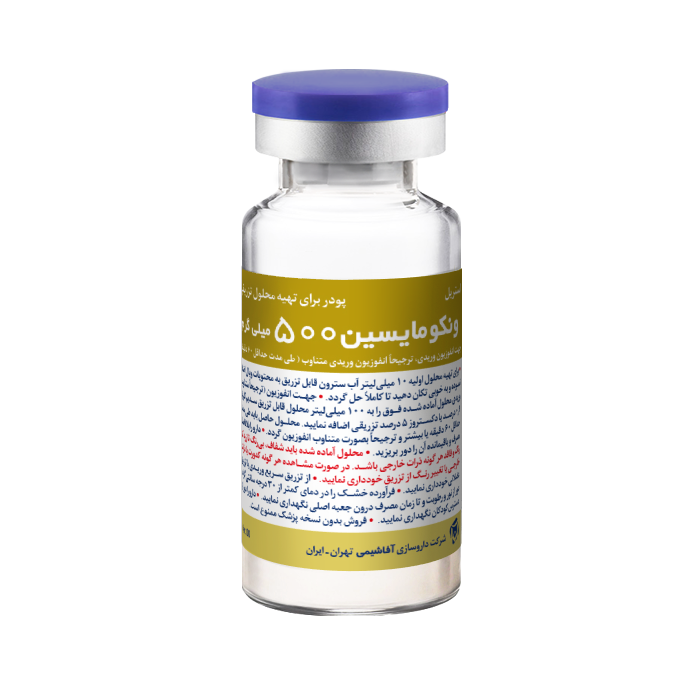
Vancoject® Vancomycin
Powder for concentrated solution for infusion 500 mg and 1 g
This medicine has been prescribed for your current condition, so do not use it in similar cases or recommend its use to others.
General instructions:
Before taking this medicine, consult your doctor in the following cases:
If you are allergic to this medicine or other medicines or any other substance such as food, preservatives, dyes, etc.
If you are taking other medicines, especially aminoglycosides (such as gentamicin, amikacin, etc.), amphotericin B, aspirin, cisplatin, cyclosporine, furosemide, polymyxin, ethacrynic acid, vecuronium, dexamethasone, antihistamines, etc.
If you have other diseases, especially kidney disease or hearing problems.
Use in Pregnancy and Lactation
Vancomycin is classified as a Category C drug by the FDA. Use of this drug during pregnancy and lactation should only be done under the advice of a physician.
Warnings:
Vancomycin should be administered with caution in patients with renal impairment.
Vancomycin should be administered with caution in patients receiving other nephrotoxic or ototoxic drugs.
The dose of vancomycin should be adjusted in patients with renal insufficiency.
In the elderly, who are more likely to have age-related decline in renal function, the dose of vancomycin should be adjusted to avoid high blood concentrations. Elderly patients are more susceptible to vancomycin-induced nephrotoxicity and ototoxicity.
In premature infants and children, monitoring of vancomycin blood concentrations is recommended.
Since intramuscular injection of this drug causes tissue necrosis and severe pain, it should only be used as an intravenous or intraperitoneal infusion and its leakage into the surrounding tissues should be prevented.
To prevent damage to the vessels, it is necessary to change the injection site each time.
This drug is for hospital use only.
Dosage:
The dosage of the drug is determined by the attending physician for each patient. However, the usual dosage of this drug is as follows.
In adults and adolescents:
7.5 mg per kilogram of body weight or 500 mg every 6 hours; or 15 mg per kilogram of body weight or 1 gram every 12 hours as an intravenous infusion.
Dosage adjustment is required in patients with renal failure.
The maximum dose in adults and in the presence of very severe infections is 3 to 4 grams daily as an intravenous infusion.
In children:
Infants less than one week old: Initial dose of 15 mg/kg body weight is given intravenously, then 10 mg/kg body weight is given intravenously every 12 hours.
Infants between one week and one month old:
Infants between one month old and 12 years old:
Initial dose of 15 mg/kg body weight is given intravenously, then 10 mg/kg body weight is given intravenously every 8 hours.
Infants from one month old to 12 years old:
10 mg/kg body weight every 6 hours or 20 mg/kg body weight every 12 hours as an intravenous infusion.
Note: In some infections, such as staphylococcal infections of the central nervous system, doses up to 60 mg/kg body weight per day have been used.
Preparation and dilution of the drug:
First, add 10 and 20 ml of sterile water for injection to the contents of the 500 mg and 1 g vials, respectively, and shake well until completely dissolved. These solutions must be diluted again. For intravenous infusion (preferably intermittent), add the above-prepared solutions to 100 and 200 ml of 0.9% sodium chloride injection solution or 5% dextrose injection solution, respectively. The resulting solution should be infused for at least 60 minutes or more, preferably intermittently.
After preparation, if you see any turbidity or foreign particles, do not inject.
Side effects:
In addition to the desired therapeutic effects, each drug may also have some unwanted side effects. If any of the following side effects occur, inform your doctor.
Less common side effects:
Change in frequency or amount of urination, difficulty breathing, drowsiness, thirst, loss of appetite, nausea and vomiting, weakness, fever and chills, cough, sore throat, fainting, hives, rapid heartbeat, low blood pressure, itchy skin, rash or redness of the face, neck, upper torso, back and arms.
Rare side effects:
Abdominal cramps and pain, hearing loss, ringing and tinnitus, severe watery diarrhea that may be bloody, unusual bleeding or bruising.
Some of the above side effects may occur even after stopping the drug. If any of the above side effects occur after the end of the treatment period, inform your doctor as soon as possible.
Storage conditions:
Store the dry product at a temperature below 30 degrees Celsius and away from light.
Dilute the prepared solution immediately and discard the remainder after a single use.
Do not use expired medicine.
Keep the medicine out of reach of children.
Dosage forms and packaging:
Each vial contains 500 mg of white opaque powder of vancomycin (as hydrochloride) and is packaged in a box of 10 with a leaflet.
Each vial contains 1 g of white opaque powder of vancomycin (as hydrochloride) and is packaged in a box of 10 with a leaflet.
Vancomycin is an antibiotic drug that is prescribed to treat some bacterial infections such as gastrointestinal infections caused by the bacterium Clostridium difficile, severe infections caused by staphylococci in situations where other common antibiotics cannot be prescribed, etc. Infections caused by Clostridium difficile are among the most common infections in patients who have recently taken antibiotics for a long time or have been hospitalized.
Mechanism of action:
Antibacterial effect: Vancomycin is bactericidal and acts by inhibiting cell wall synthesis and blocking glycopeptide polymerization. The spectrum of action of this drug includes many gram-positive organisms, including those resistant to other antibiotics. This drug is effective in infections caused by Staphylococcus epidermidis and methicillin-resistant Staphylococcus aureus. It is also effective in the treatment of infections caused by penicillin-resistant Streptococcus pneumoniae.
Absorption: Systemic absorption is very low after oral administration.
Distribution: Widely distributed in body fluids, including pericardial, pleural, ascites, synovial, and placental fluids. The drug reaches therapeutic concentrations in the cerebrospinal fluid (CSF) of patients with meningitis. Therapeutic concentrations of the drug are reached within two hours (18-26 mcg/ml peak concentration after infusion) and the minimum concentration before infusion is 5-10 mcg/ml. However, these concentrations may vary depending on the laboratory and the time of sampling.
Excretion: After intravenous administration, it is excreted mainly by glomerular filtration through the kidneys and after oral administration in the feces.
The plasma half-life of the drug is six hours in patients with healthy kidneys and about 32 hours in patients with creatinine clearance between 10-30 ml/min. If creatinine clearance is less than 10 ml/min, the plasma half-life will be 146 hours.
General characteristics of interactions:
– Changes in the normal flora of the gastrointestinal tract
– Impaired immune response to bacterial agents
– Exacerbation of nephrotoxicity
– Exacerbation of otitis media
Class X interactions (avoidance):
B.C.G. (intravesical), cholera vaccine
Decreased effects of drugs by vancomycin:
B.C.G. (intravesical), B.C.G. vaccine (immunogenic), cholera vaccine, lactobacillus and estriol, sodium picosulfate, typhoid vaccine
Decreased effects of vancomycin by drugs:
Bile acid sequestrants
Increased effects of drugs by vancomycin:
Aminoglycosides, colistimethate, neuromuscular blocking drugs
Increased effects of vancomycin by drugs:
Nonsteroidal anti-inflammatory drugs, piperacillin
If you require our services and are seeking consultation from the Afachemi team, you can get in touch with our experts by completing the consultation form.


