
10 pieces
Injectable
40mg
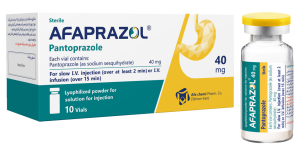
Afaprazole®
Pantoprazole
Lyophilized powder for injection
This medicine has been prescribed for your current condition, so do not use it for similar conditions or recommend its use to others.
General instructions:
Before using this medicine, consult your doctor in the following cases:
If you have a history of allergy to this medicine or its ingredients.
If you have liver dysfunction.
If you are taking any other medicine.
Use during pregnancy and lactation:
Use of the medicine during pregnancy and lactation should be under the advice of a specialist doctor.
Warnings:
If you develop any allergy to the medicine, stop taking the medicine.
Take the medicine at regular intervals and complete the course of treatment.
Dosage:
The dosage is determined by the attending physician, but the usual dosage of this medicine is as follows:
Adults:
In patients with gastroesophageal reflux: 40 mg daily for 7 to 10 days as an intravenous infusion over 15 minutes at an infusion rate of 3 mg/minute.
In these patients, the efficacy and effectiveness of the medicine for a period of more than 10 days has not yet been studied.
In patients with excessive gastric acid secretion: 80 mg every 12 hours as an intravenous infusion over 15 minutes at an infusion rate of 3 mg/minute. In these patients, the efficacy of the medicine with a daily dose of more than 240 mg or a treatment period of more than 6 days has not yet been studied. When the patient is able to take the oral dose, the oral form of the drug should be substituted for the injectable form.
Doses greater than 40 mg/day have not been studied in patients with hepatic impairment.
How to use the drug:
Method of preparing a solution for infusion of 0.4 mg/ml (15 minutes):
Dissolve the contents of the pantoprazole vial in 10 ml of 0.9% sodium chloride injection solution, then dilute the resulting solution with 100 ml of one of the 5% dextrose injection solutions or 0.9% sodium chloride to obtain a final concentration of 0.4 mg/ml.
Preparation of solution for infusion 0.8 mg/ml (15 minutes):
Dissolve the contents of the pantoprazole vial in 10 ml of 0.9% sodium chloride injection solution
Dilute the injectable solutions with 5% dextrose or 0.9% sodium chloride and make up to 100 ml to obtain a final concentration of 0.8 mg.
Preparation of solution for slow intravenous injection over at least 2 minutes:
Dissolve the contents of the vial in 10 ml of 0.9% sodium chloride injection solution to obtain a clear solution with a concentration of 4 mg/ml, then inject slowly intravenously over at least 2 minutes.
The resulting solutions for injection should be clear, without discoloration and without any turbidity or foreign particles. If any foreign particles or discoloration are observed, do not inject. Do not use the resulting solution immediately after preparation for injection and do not store it.
Side effects:
Every drug, along with its desired therapeutic effects, may cause some unwanted effects. Consult your doctor if any of the following side effects occur:
With the use of this drug, diarrhea, headache (with a higher probability of occurrence), abdominal and back pain, anxiety, weakness, joint pain, inflammation of the bronchi, confusion, constipation, cough, dizziness and indigestion are among the side effects that occur with less severity.
All of these side effects will require medical attention if they recur: Side effects such as anaphylaxis, angioedema, chest pain, shortness of breath, gastroenteritis, hyperglycemia, and infection are also less likely to occur but will require medical attention if they occur.
Storage conditions:
Store vials containing pantoprazole powder at a temperature below 25°C, away from light, and in the original box until use.
Avoid using expired medications.
Inject the solutions immediately after preparation and discard the remainder.
Dosage forms and packaging:
Each vial of afaprazole contains 40 mg of pantoprazole (as sodium and 1.5 water molecules) and is packaged in a box of 1 with an instruction sheet.
Pantoprazole is a proton pump inhibitor that inhibits the activity of the proton pump by binding to the hydrogen-potassium adenosine triphosphatase (on the surface of the gastric parietal cells), thereby suppressing gastric acid secretion. Binding to the atrial ATPase results in an antisecretory effect on gastric acid that lasts for up to 24 hours. Pantoprazole is metabolized in the liver by the cytochrome P450 system, with about 71% of its metabolites excreted in the urine and 18% in the feces.
Pantoprazole is a widely used drug known for its effectiveness in reducing stomach acid production. It is commonly prescribed to manage conditions such as gastroesophageal reflux disease (GERD), peptic ulcer disease, and Zollinger-Ellison syndrome.
Pantoprazole tablets are effective in reducing the symptoms of acid-related disorders by inhibiting excess stomach acid production, thereby relieving the symptoms of this digestive disorder.
Reflux, often known as gastroesophageal reflux disease (GERD), is a condition in which stomach acid and undigested food flow up into the esophagus, causing discomfort and irritation of the esophagus, throat, and even, in the long term, tooth decay. This backflow of acid can lead to a variety of symptoms, including heartburn, regurgitation, chest pain, and even a chronic cough. The acidic environment in the esophagus can, over time, cause inflammation and damage to the lining of the esophagus, potentially leading to complications such as esophagitis or Barrett’s esophagus, a precancerous condition.
Managing reflux and its acidic effects often involves lifestyle changes, dietary adjustments, and in some cases, medication to reduce stomach acid production, providing relief and reducing the risk of long-term complications of the disorder.
Treatment and prevention of gastroesophageal reflux, treatment of Zollinger-Ellison syndrome, treatment of duodenal ulcers, treatment of stomach ulcers.
Use during pregnancy and lactation:
Drug use during pregnancy and lactation should be under the advice of a specialist.
Warnings:
In case of any allergy to the drug, stop taking the drug.
Take the drug at regular intervals and complete the course of treatment.
Dosage:
The dosage of the drug is determined by the attending physician, but the usual dosage of this drug is as follows:
Adults:
In patients with gastroesophageal reflux disease: 40 mg daily for 7 to 10 days as an intravenous infusion over 15 minutes at an infusion rate of 3 mg/minute.
In these patients, the efficacy and effectiveness of the drug for a period of more than 10 days has not yet been studied.
In patients with excessive secretion of gastric acid: 80 mg every 12 hours as an intravenous infusion over 15 minutes at an infusion rate of 3 mg/minute. In these patients, the efficacy of the drug with a daily dose of more than 240 mg or a treatment period of more than 6 days has not yet been studied.
When the patient is able to use the oral dose, the oral form of the drug should be replaced by the injectable form.
In patients with liver failure, a dose of more than 40 mg per day has not been studied.
How to use the drug:
Method of preparing a solution for infusion of 0.4 mg / ml (15 minutes):
Dissolve the contents of the pantoprazole vial in 10 ml of 0.9% sodium chloride injection solution, then dilute the resulting solution with 100 ml of one of the 5% dextrose injection solutions or 0.9% sodium chloride injection solutions to obtain a final concentration of 0.4 mg / ml.
Preparation of solution for infusion 0.8 mg/ml (15 minutes):
Dissolve the contents of the pantoprazole vial in 10 ml of 0.9% sodium chloride injection solution. Mix the contents of the two vials prepared above, then dilute with 80 ml of either 5% dextrose injection solution or 0.9% sodium chloride injection solution to 100 ml to obtain a final concentration of 0.8 mg/ml.
Preparation of solution for 2-minute infusion:
Dissolve the contents of the vial in 10 ml of 0.9% sodium chloride injection solution to obtain a clear solution with a concentration of 4 mg/ml, then inject slowly intravenously over 2 minutes.
The resulting solutions for injection should be clear, without discoloration and free of any turbidity or foreign particles. If any foreign particles or discoloration are observed, do not inject.
Do not store the resulting solution immediately after preparation for injection.
Store the dry product at a temperature below 25 degrees Celsius and away from light.
Keep the medicine out of the reach of children.
Side effects:
In addition to the desired therapeutic effects, any medicine may cause some unwanted effects. Consult your doctor if they occur:
With the use of this medicine, diarrhea, headache (more likely to occur), abdominal and back pain, anxiety, weakness, joint pain, inflammation of the bronchi, confusion, constipation, cough, dizziness and indigestion are among the side effects that occur with less severity.
All of these side effects will require medical attention if they recur.
Complications such as anaphylaxis, angioedema, chest pain, shortness of breath, gastroenteritis, hyperglycemia, and infection are also less likely to occur, but if they occur, they will require medical attention.
Pantoprazole may reduce the absorption of ampicillin, iron salts, and ketoconazole. Sucralfate may delay the absorption of pantoprazole and reduce its bioavailability. It is recommended that pantoprazole be taken 30 minutes before sucralfate. Pantoprazole may increase INR and PT. Food delays the absorption of the drug by up to 2 hours but does not reduce the extent of absorption.
If you require our services and are seeking consultation from the Afachemi team, you can get in touch with our experts by completing the consultation form.


