
30 pieces
Oral
4mg, 1mg
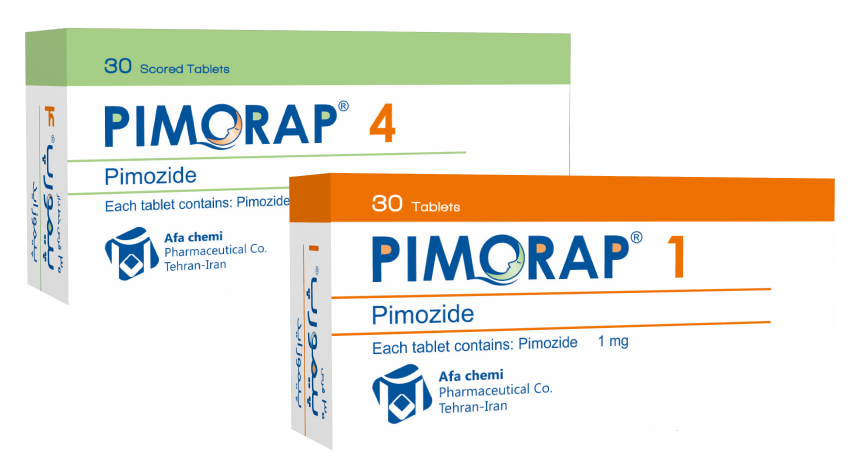
1 mg tablet and 4 mg scored tablet
This medicine has been prescribed for your current condition, so do not use it in similar cases or recommend its use to others.
General instructions:
Before taking this medicine, consult your doctor in the following cases:
If you are allergic to this medicine or any other substance such as food, preservatives, dyes, etc.
If you have a history of any disease, especially depression, Parkinson’s, heart failure, arrhythmia, liver problems, epilepsy or seizures.
If you are taking any medication.
Use during pregnancy and lactation:
Pimozide should not be used during pregnancy and lactation except under the advice of a specialist.
Warnings:
This medicine is contraindicated in patients with dementia due to psychosis who are being treated with anticytotoxic drugs. Because it can cause death from cardiac arrest.
Pimozide interacts with many drugs. Be sure to inform your doctor if you are taking medications such as anticholinergics, levodopa, antibiotics such as erythromycin, clarithromycin, antifungal drugs such as ketoconazole, fluconazole, cardiovascular drugs such as quinidine, amiodarone, sotalol and diuretics, antiviral drugs such as idinavir, ritonavir, calcium channel blockers, allergy drugs such as terfenadine, digestive drugs, antimalarial drugs, antidepressants such as amitriptyline, sertraline, paroxetine, citalopram, escitalopram, neuroleptics such as chlorpromazine and thioridazine.
Grapefruit juice can affect the metabolism of drugs, so avoid taking pimozide with grapefruit juice.
Taking pimozide with alcohol can increase the side effects of the drug and cause drowsiness.
Taking pimozide can change blood electrolytes such as potassium or magnesium. The patient should be monitored during use.
The possibility of extrapyramidal, anticholinergic, hypersensitivity and drowsiness is higher in the elderly than in adults; therefore, the therapeutic dose should be reduced.
Dosage:
The dosage of the drug is determined by the attending physician for each patient. However, the usual dosage of the drug is as follows.
Tourette syndrome:
Adults: Start with 1 to 2 mg per day (in two divided doses) and increase based on response and tolerance.
Elderly: Use lower doses based on response and tolerance.
Schizophrenia:
Adults: Start with 2 mg once a day and increase up to 20 mg per day based on response.
Elderly: Start with 1 mg once a day and increase up to 20 mg per day based on response.
Elderly: Start with 1 mg once a day and increase up to 20 mg per day based on response.
Paranoid:
Adults: Start with 4 mg once a day and increase to 16 mg per day based on response.
Elderly: Start with 2 mg once a day and increase to 20 mg per day based on response.
Note: Pimozide is not recommended for children under 12 years of age.
How to take the drug:
The drug should be taken once a day and in the morning.
Avoid grapefruit during treatment with the drug.
If you take more than the prescribed amount, see a doctor.
If you miss a dose, take it as soon as you remember. If it is almost time for your next dose, skip the missed dose and do not double the dose.
Avoid stopping the drug suddenly.
Pimozide may cause dizziness and fatigue, so avoid driving or doing things that require great attention.
Side effects:
In addition to the desired therapeutic effects, every drug may have some unwanted side effects. Inform your doctor if any of the following side effects occur.
Important side effects that require doctor’s notice if they occur:
Severe allergic reactions such as swelling of the face, tongue, lips, difficulty breathing, itching and skin rashes, in case of neuroleptic malignant syndrome with symptoms: palpitations, sweating and changes in blood pressure, rapid breathing, muscle stiffness, decreased consciousness and coma.
Less common side effects:
Dry mouth, confusion, drowsiness, visual disturbances, constipation, increased appetite, feeling thirsty, dizziness, nervousness, sensitivity to light, postural hypotension, nasal congestion and diarrhea.
Rare side effects:
Heart attack, seizures, increased QT interval, leukopenia, agranulocytosis, jaundice and drug-induced lupus.
Storage conditions:
Store the medicine at a temperature below 30 degrees Celsius, away from light and moisture.
Avoid using expired medicine.
Keep the medicine out of reach of children.
Dosage forms and packaging:
This medicine is produced and supplied in the form of tablets containing 1 and 4 mg of pimozide in boxes of 30 under the brand name Pimorp by Afa Shimi Pharmaceutical Company.
Tehran, 5th km of Karaj Old Road, Sanayi Megli Street, 17th Shahrivar Street, End of Noord Street, Tel. 64059
Ref: USPDI 2007 & BNF 76
Pimozide is an antipsychotic of the diphenylbutylpiperidine series and acts by inhibiting dopamine receptors in the central nervous system. It also increases dopamine turnover, blocks voltage-gated calcium channels and opioid receptors, and increases prolactin concentrations.
Pimozide is used to relieve vocal and motor tics in patients with Tourette’s syndrome whose symptoms are severe or who are intolerant of or have not responded to haloperidol. It is also used as a maintenance treatment in chronic juvenile mania without symptoms of agitation or hyperactivity.
It is indicated for the treatment of chronic schizophrenia and the prevention of relapse, as well as in other psychoses, especially paranoid hypochondriac and monosymptomatic psychoses. Since individual response to antipsychotic drugs varies, the dose should be determined individually and should be initiated and titrated under close clinical supervision.
In determining the initial dose, the patient’s age, severity of symptoms, and previous response to other neuroleptics should be considered. Dose increases should be made at weekly or more frequent intervals and in increments of 2-4 mg in the daily dose.
Also, the use of pimozide is not recommended in children under 12 years of age, and elderly patients require half the usual initial dose of pimozide, because the likelihood of extrapyramidal, anticholinergic, hypersensitivity, and drowsiness is higher in the elderly than in adults; therefore, the therapeutic dose should be reduced.
Severe allergic reactions such as swelling of the face, tongue, and lips, difficulty breathing, itching, and skin rashes, and neuroleptic malignant syndrome with symptoms of palpitations, sweating, and changes in blood pressure, rapid breathing, muscle stiffness, decreased consciousness, and coma are among the side effects of pimozide. Myocardial infarction, seizures, QT prolongation, leukopenia, agranulocytosis, jaundice, and drug-induced lupus rarely occur with pimozide.
More than 50% of the drug is absorbed after oral administration. The drug is metabolized by the liver and excreted in the urine by 50-40% and in the feces by 20%. Its half-life in healthy subjects is 29 hours, in patients with juvenile mania by 55 hours, and in patients with Tourette syndrome by a single dose by 110 hours. The safety of pimozide in pregnancy has not been established.
Therefore, it should not be prescribed to women of childbearing age, especially during the first trimester of pregnancy, unless the physician considers that the expected benefit to the patient outweighs the potential risk to the fetus.
Infants exposed to antipsychotics, including pimozide, during the third trimester of pregnancy are at risk of adverse reactions, including extrapyramidal symptoms, which may vary in severity and duration after delivery. Pimozide may be excreted in breast milk. Breastfeeding should be discontinued if the use of this drug is considered essential.
If the drug is discontinued, recurrence of symptoms may not occur for several weeks or months. Acute symptoms, including nausea, vomiting, sweating and insomnia, have been described after abrupt discontinuation of antipsychotic drugs. Recurrence of psychotic symptoms may also occur. The emergence of involuntary movement disorders (such as akathisia, dystonia and dyskinesia) has also been reported.
Gradual withdrawal is therefore recommended and, as with all neuroleptics, extrapyramidal symptoms may occur. Tardive dyskinesia may appear in some patients on long-term treatment or after discontinuation of the drug. The syndrome is characterized mainly by rhythmic involuntary movements of the tongue, face, mouth or jaw.
The manifestations may be permanent in some patients. The syndrome may be masked when treatment is restarted, when the dose is increased or when a change is made to another antipsychotic drug. Treatment should be discontinued as soon as possible as there is no known cure for tardive dyskinesia.
As with other antipsychotics, pimozide should be used with caution in patients with a history of seizures or other conditions that potentially lower the seizure threshold, such as alcohol withdrawal or brain injury.
In addition, grand mal seizures have been reported in association with pimozide. Impairment of the body’s ability to lower core body temperature has been attributed to antipsychotic agents. Appropriate care is advised when prescribing pimozide to patients experiencing conditions that may lead to an increase in core body temperature, e.g., strenuous exercise, exposure to extreme heat, concomitant use of medications with anticholinergic effects, or exposure to dehydration.
Hormonal effects of antipsychotics include hyperprolactinemia, which may cause galactorrhea, gynecomastia, oligomenorrhea or amenorrhea, and erectile dysfunction. Pimozide should only be used with extreme caution in patients with thyrotoxicosis. Caution is also advised in patients with renal insufficiency, Parkinson’s disease, and pheochromocytoma.
In schizophrenia, the response to treatment with antipsychotic medications may be delayed; if the medications are stopped, the recurrence of symptoms may not become apparent for several weeks or months.
Older people with dementia who are treated with antipsychotic medications are at slightly higher risk of death compared with those who are not treated.
Pimozide may prolong the QT interval on the electrocardiogram. Therefore, electrocardiograms should be performed regularly before starting treatment and during treatment with pimozide (especially when adjusting the dose). QT prolongation of more than 0.47 seconds in children and 0.52 seconds in adults or more than 25% of pretreatment values should be considered a criterion for discontinuation or reduction of the dose.
This drug should be used with caution in patients with narrow-angle glaucoma, history of paralytic ileus, prostatic hypertrophy, ECG abnormalities, hepatic or renal failure, history of seizures, and hypersensitivity to pimozide or other antipsychotics.
Discontinuation of the drug should be considered if tardive dyskinesia occurs. Neuroleptic malignant syndrome has been observed with concomitant use of antipsychotics. Symptoms of this syndrome include hyperpyrexia, muscle rigidity, psychotic symptoms (catatonic), and autonomic disturbances (irregular pulse and blood pressure, tachycardia, arrhythmia, and Excessive sweating. If this syndrome occurs, the drug should be discontinued immediately.
Pimozide interacts with many drugs. This drug can interfere with the antiparkinsonian effect of levodopa. To account for the decrease in seizure threshold, it may be necessary to increase the dose of anticonvulsant drugs.
Concomitant use of pimozide with drugs that prolong QT interval is contraindicated. Patients with a history of cardiac arrhythmia, long QT syndrome, severe CNS weakness, coma, vocal and motor tics other than Tourette’s disorder, hypokalemia, and a history of breast cancer should not use this drug.
Concomitant use of pimozide with anticholinergic drugs that are inhibitors of cytochrome CYP450 and CYP3A4 or CYP2D6 is prohibited.
Macrolide antibiotics such as erythromycin and clarithromycin inhibit the metabolism of pimozide, resulting in significantly increased plasma levels of pimozide.
This drug should also not be used in patients treated with QT prolonging drugs, azole antifungals such as fluconazole, ketoconazole, protease inhibitors such as idinavir and ritonavir.
Concomitant treatment with neuroleptics such as chlorpromazine and thioridazine should be minimized because they may predispose to the cardiotoxic effects of pimozide.
Taking pimozide with antiemetics such as metoclopramide increases the risk of extrapyramidal side effects.
Taking this drug with calcium channel blockers may lead to increased blood pressure lowering effects.
Pimozide is contraindicated with concomitant use of serotonin reuptake inhibitors such as sertraline, paroxetine, citalopram, and escitalopram. Pimozide is metabolized primarily by the cytochrome P450 enzyme system and to a lesser extent by the CYP 2D6 subtype. Since CYP1A2 may also contribute to the metabolism of pimozide, prescribers should be aware of drug interactions with inhibitors of this enzyme system. Concomitant use of drugs that inhibit CYP 2D6, such as quinidine, is also contraindicated. Inhibition of either or both of these cytochrome P450 systems may result in increased blood concentrations of pimozide and prolongation of the QT interval.
Concomitant use of drugs that cause electrolyte imbalance is not recommended. Diuretics, especially those that cause hypokalemia, should be avoided, but potassium-sparing diuretics are preferred if necessary. Pimozide can alter blood electrolytes such as potassium or magnesium, and patients should be monitored during treatment.
This drug is contraindicated in patients with dementia due to psychosis who are being treated with antipsychotic drugs, as it can cause death from cardiac arrest. Pimozide prolongs the QT interval, so it is contraindicated in patients with pre-existing congenital QT prolongation or a family history of this syndrome, as well as in patients with a history of cardiac arrhythmia and a history of Trade de pointes.
It should not be used in cases of hypokalemia or hypomagnesemia or clinically significant cardiac disorders, acute myocardial infarction, decompensated heart failure, arrhythmias treated with antiarrhythmic drugs, and in patients with severe central nervous system depression, as well as in patients with known hypersensitivity to pimozide or other diphenylbutyl-piperidine derivatives, or in patients with depression or Parkinson’s syndrome.
Elderly people with dementia who are being treated with antipsychotic drugs are at slightly increased risk of death compared with those who are not being treated. Pimozide is not licensed for the treatment of behavioral disorders associated with dementia.
Since patients treated with antipsychotic drugs often present with risk factors for venous thromboembolism, all potential risk factors for venous thromboembolism should be identified before and during treatment with pimozide, and preventive measures should be taken.
Concomitant use of pimozide with alcohol can increase the side effects of the drug and cause drowsiness.
Since grapefruit juice inhibits the metabolism of drugs metabolized by CYP3A4, grapefruit juice should be avoided with pimozide. ECGs should be performed before starting pimozide therapy and periodically during treatment. If repolarization changes, QT interval prolongation, T wave changes, or (U) wave formation appear, or arrhythmias develop, the need for pimozide therapy in these patients should be reviewed. They should be closely monitored and their pimozide dose should be reduced or the drug discontinued.
If the QT or QTC is >500 msec, pimozide should be discontinued. As with other neuroleptics, caution is advised in patients with cardiovascular disease.
Drugs that may cause electrolyte disturbances are not recommended in patients receiving pimozide long-term and should be considered as a risk factor, and periodic electrolyte monitoring is recommended. Caution is advised in patients with liver disease, as pimozide is metabolized in the liver.
If you require our services and are seeking consultation from the Afachemi team, you can get in touch with our experts by completing the consultation form.


